

Hajj Pilgrimage Guide: Steps of Hajj , Meaning & Online Quran Tips
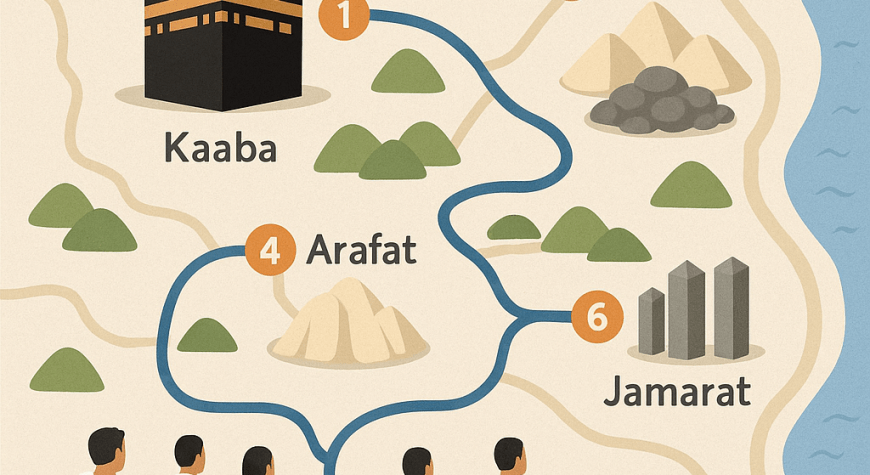
The Hajj pilgrimage is among the holiest pilgrimages a Muslim can take. It is not only a religious duty but also a profoundly life-changing spiritual experience. In addition to learning about the 7 steps of Hajj, many Muslims also seek education through online Quran teaching in order to prepare their hearts and minds prior to the start of the pilgrimage.
This pilgrimage is a once in a lifetime obligation for those who are physically and financially capable. It is a summons by Allah to cleanse the soul, rebalance intentions, and ask forgiveness. The Hajj pilgrimage unites Muslims from diverse backgrounds, erasing all boundaries of race, nationality, and wealth. They converge in one location, clad in the same attire, surrendering to the same Creator.
The Holy Origin and Historical Heritage of Hajj Pilgrimage
Hajj’s history goes back to Prophet Ibrahim (Abraham) and his household. He was tested by Allah with numerous trials, every one of which was incorporated into the pilgrimage rituals. His searching for water by his wife Hajar between Safa and Marwah hills, and building the Kaaba with his son Ismail, are turning points in the history of Islam.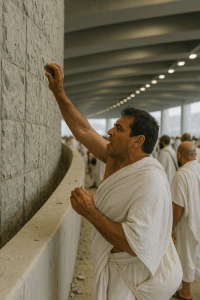
These historical aspects are not tales. These are ingrained in the very fabric of each pilgrimage step. The perception of these relationships makes the experience much more poignant. With proper study and contemplation, particularly through online teachings of the Quran, pilgrims receive the enlightenment necessary to appreciate each ritual. This knowledge allows spiritual progress and commitment.
Preparing for Hajj Pilgrimage in the Modern Age
In the modern age of information technology, it has become easier but complicated to prepare for the Hajj pilgrimage. Opportunities for religious education are available through technology. It is now possible to study religion online, even courses that give elaborate descriptions of the 7 steps of the Hajj. Through this preparation, one comes closer to Allah.
Contemporary preparations now extend beyond travel arrangements. In fact, an authentic pilgrim actively aims to purify the heart and fully comprehend the reason behind each action. Moreover, with global internet access, most Muslims increasingly rely on online Quran classes to prepare spiritually. This includes learning the proper prayers, clearly understanding Quranic verses related to Hajj, and consciously developing the appropriate mindset.
The 7 Steps of the Hajj Pilgrimage
Hajj consists of ritualized acts. Each of them is an act of worship. Collectively, they constitute the 7 steps of Hajj. Each step is significant in its own way, bringing the believer closer to Allah.
From wearing the Ihram to completing Tawaf and standing at Arafat, the steps are deep. They represent submission, patience, and perseverance. Studying the 7 steps of the Hajj allows pilgrims to remain concentrated. With easy and straightforward instructions, many of which are accessed through online Quran instruction, the steps become not just movements but moments of transformation.
Ihram and the Intention of Purity
The first step of the Hajj pilgrimage begins with the state of Ihram. To begin with, this isn’t just about wearing two white cloths. Instead, it symbolizes the shedding of ego and worldly distractions. As the journey begins, the pilgrim enters a sacred state. From that point on, rules apply, and patience is tested. The body actively prepares to endure. More importantly, the heart is fully set to connect with Allah.
Niyyah or intention is stated. It is a new beginning. It renews one’s purpose. This intention must be accompanied by knowledge. Knowing the proper duas and etiquettes, which are usually accomplished through online Quran education, guarantees sincerity. After all, without knowledge, action is not illuminated.
Tawaf Around the Kaaba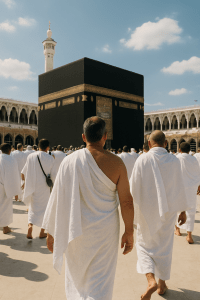
The second part is circling the Kaaba seven times. This is Tawaf. It represents the believer’s commitment and their circling around their Creator. The movement is in circles incessant, like Allah’s mercy. As pilgrims move in Tawaf, they recite supplications, thanking Allah and asking for His forgiveness.
But seven times why? What does it signify? These are answered in the Quran and Hadith. With concentrated study, like found in online Quran instructions, the answers are made plain. Tawaf is more than a ritual; it’s a labor of love. Each step is a prayer. Each circuit is a renewal.
Sa’i Between Safa and Marwah
Following Tawaf is Sa’i. Pilgrims perform a walk between Safa and Marwah hills. They do so seven times, as Hajar did. Her trek was an exercise in faith and desperation. But her faith wasn’t unfounded—the miraculous arrival of Zamzam.
This trek is no easy feat. It is a reenactment of a tale based on trust. Hajar’s tale demonstrates that Allah acts with respect to sincere effort. Contemplating this while doing Sa’i makes it emotionally richer. Lessons such as these are usually discussed in online Quran teaching courses, which focus on the values involved.
Standing at Arafat: The Pinnacle of Hajj
Of all the stages, Day of Arafat is most important. Without standing on Arafat, the Hajj pilgrimage is incomplete. Pilgrims assemble in Arafat plain on this day. Between noon and sunset, they pray, turn over to Allah, and make dua. It is a rehearsal for the Day of Judgment.
Most teachers describe this as when the soul confronts its Lord. There are tears. There is erasure of sin. Hearts are remolded. This instant of total surrender can be fully understood only with the proper attitude. Those who take online Quran lessons prior to Hajj tell us that their experience at Arafat was more personal and intense.
Muzdalifah: Under the Open Skies
From Arafat, pilgrims then proceed to Muzdalifah. It’s a humble place. Here, pilgrims camp overnight under the open sky. During their stay, they pick up pebbles, which they will use the following day. There are no tents. No comfort. Just the stars and the ground.
This step, therefore, teaches dependence on Allah. In addition, it reminds us that we are from dust and will eventually return to dust. While resting under the night sky, pilgrims actively recite prayers and consciously recall their mission. Typically, online Quran teaching courses clearly explain which prayers to say. With this guidance in place, pilgrims remain spiritually active and engaged.
The Stoning at Mina
Having pebbles in one’s hand, the stoning of the three pillars in Mina comes next. The action signifies rejecting Shaytan. It is a reminder of when Prophet Ibrahim was being tested. Shaytan attempted to seduce him. But he rejected the whispers. He stoned Shaytan.
Pilgrims today follow this rejection. It is a symbolic act, but effective. It’s an opportunity to reject sin, distraction, and pride. Knowing the history makes this tradition effective. That is usually examined in depth through online teaching of the Quran, which addresses the religious significance of the 7 steps of the Hajj.
The Sacrifice and Eid ul-Adha
Following the stoning, there is sacrifice. It commemorates Prophet Ibrahim’s readiness to listen to Allah, even if it took him offering his dearest son. But Allah substituted the son with a ram instead. It was a trial—and a favor.
Eid ul-Adha is commemorated on this day by Muslims all over the world. Moreover, they actively recall the essence of sacrifice. Pilgrims also shave their hair, thereby representing rejuvenation. It is both an act of submission and thankfulness. Additionally, it represents a turning point. With each strand of hair that falls, pilgrims leave a previous error behind. The Quran refers to these acts, and instructors regularly discuss them in online sessions of Quran teaching.
Final Tawaf of Hajj Pilgrimage and Return to Normal Life
As the Hajj pilgrimage reaches its end, there is one last ritual to be performed. This is the Tawaf al-Wida, or the Farewell Tawaf. The pilgrims go back to the Kaaba a final time. They circumambulate it seven times, as they did when they first started on their holy journey. But this time, the mood is not the same. There is a sense of gratitude, sadness, and profound spiritual satisfaction.
Tawaf al-Wida signals the conclusion of the pilgrimage. Moreover, it is not merely a physical movement, but truly an emotional goodbye. Throughout the days of Hajj, the Kaaba, the House of Allah, has remained the center of the pilgrim’s focus. Therefore, it is never easy to leave it behind. Pilgrims shed tears. Their hearts melt. Meanwhile, the environment fills with silence and tranquility. At this moment, pilgrims possess a powerful bond that words simply fail to describe. The white marble beneath their feet, the Black Stone within sight, and the repeated invocations together create a moment of unforgettability.
In addition, this final step is also a reminder. Hajj is not rituals alone. It is about transformation. Genuine change occurs when the pilgrim returns home. Life goes on, but the soul has changed. The Mina trials, the Arafat prayers, and the Muzdalifah quiet now exist in memory. They inform decisions, form thoughts, and direct habits.
In addition, online Quran teaching offers flexibility. It allows returnees to integrate study into their daily lives. Whether one is a student, parent, or working professional, learning continues. Lessons remain consistent. The spiritual spark lit during Hajj is preserved.
Hajj Pilgrimage as a Lifelong Reminder
The Hajj is not just about rituals. It’s about change. Every step taken is a reflection. Every prayer said is a commitment. The 7 steps of the Hajj teach humility, patience, and surrender. These values are not temporary. They must remain.
Pilgrims do return transformed. But change has to be nurtured. That’s why steady learning, such as online Quran teaching, is necessary. It keeps the momentum going. It reminds believers of what they witnessed, felt, and vowed during Hajj.
Online Quran Teaching: Spiritual Companion for Hajj Pilgrimage
Learning the Quran is not a matter of time; rather, it is a lifelong process. Especially before and after Hajj, it becomes all the more crucial. Moreover, online Quran teaching helps Muslims across the globe develop clarity and understanding. Through this, they come to know how the Quran relates to Hajj rituals.
From Ibrahim verses to sacrifice stories, and from reflect commands to forgiveness guidance—the Quran does it all. Furthermore, online access makes it simpler to learn. It also breaks barriers. Consequently, for individuals getting ready for the Hajj pilgrimage, it becomes an empowerment tool.
Bridging Faith and Technology for Better Understanding
Technology and faith are not mutually exclusive, when used properly, can enrich faith. Technology can unite students and teachers all over the world. It can make the Quran reach every household.
That’s the beauty of teaching the Quran online. It opens doors. It brings structure. And it inspires introspection. Pilgrims are able to learn the 7 stages of the Hajj in depth even before reserving a ticket. They are able to keep learning even after they have come back. That is how technology enhances spirituality.
Why Learn Online?
Convenience. Consistency. Personal development. These are only a few of the reasons that online Quran education has gained popularity. It permits Muslims to learn at their own speed. It accommodates various learning styles.
More significantly, it prepares the soul. Whether you’re organizing the Hajj pilgrimage or merely aspiring to know Islam more, studying the Quran online is a step in the right direction. It develops intention. It makes action deeper. And it improves every religious experience.
Continuing the Journey After Hajj Pilgrimage
Hajj comes to an end physically, but its teachings do not disappear. Pilgrims need to keep going. They have to live through what they learned. They need to remain humble. Remain thankful. Remain Allah-conscious.
Online Quran instruction is a perfect way to keep going down this road. It imparts order. It instills discipline. And it brings the Quran into everyday life. This keeps pilgrims on the path they began in Makkah.
Final Thoughts: Hajj, A Journey Beyond Time
The Hajj journey is more than a travel experience. It’s a reset. An opportunity to purge the heart and redefine the soul. The 7 steps of Hajj are not merely physical actions—they are spiritual achievements.
Those who prepare themselves with reflection, dua, and online Quran classes usually experience their Hajj more profoundly. They take the experience with them for their entire lives. And that is the real success of Hajj—not arriving in Makkah, but allowing the process to change you.
One Comment
user974930
August 9, 2025 AT 7:00 amNice post! 1754704849